

Public Collaborators Council
People living with multiple sclerosis are partners in our research: helping shape the questions, the science and the impact.
Why Community Involvement Matters To Us
The lived experience of MS is central to the way we conduct research. By working closely with people living with MS, we ensure that our studies focus on what matters most and lead to outcomes that can genuinely improve lives.
This approach is driven by a recognition that multiple sclerosis affects every person differently. Understanding the realities of living with MS is essential to designing research that is meaningful, relevant and impactful.
That is why people living with MS are actively involved throughout our research program. Their perspectives help ensure that our work addresses real-world challenges and leads to outcomes that matter to the MS community.
This partnership strengthens the quality of our science while ensuring that the knowledge we generate has genuine value for people living with the disease.

The best MS research happens when the people affected by the disease help
guide the science.
Involvement Across the Research Journey
People living with MS contribute at every stage of our research
We recognise that we cannot truly understand the needs of people living with MS in our community unless our Public Collaborators Council has representatives from diverse backgrounds and life experiences, including often overlooked groups.
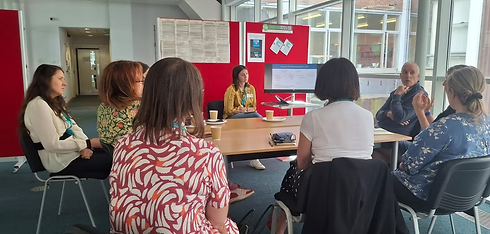
This is why EVERY person living with MS that visits our clinic is invited to participate in regular surveys and to attend our research strategy sessions. These sessions are held both in-person and online, and compensation for travel and time is offered - reducing potential barriers that may prevent participation.
STRATEGY SESSIONS
We recognise that we cannot truly understand the needs of people living with MS in our community unless our Public Collaborators Council has representatives from diverse backgrounds and life experiences, including often overlooked groups.
This is why EVERY person living with MS that visits our clinic is invited to participate in regular surveys and to attend our research strategy sessions. These sessions are held both in-person and online, and compensation for travel and time is offered - reducing potential barriers that may prevent participation.
Accessible, easy to understand updates from these sessions - as well as our overall research progress and highlights - are distributed to all participants through our quarterly public newsletters and across our social media channels.

RESEARCH PRIORITISATION GROUPS
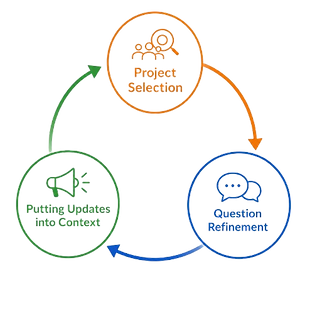
It is imperative that our research is aligned with the priorities of people living with MS from the very beginning. To ensure this, interested participants of our strategy sessions are invited to join one our Research Prioritisation Groups (RPGs).
These groups have three main aims:
1. Discuss our research ideas and help select projects that have the most relevant and largest potential impact to their lives
2. Work with us to refine our research questions to establish targeted, specific study goals
3. Participate in analysis of project updates, helping us communicate these appropriately to our community and decide on future directions.
PROJECT STEERING GROUPS
As we move throughout our studies, we continue to involve people living with MS. They help us assess the feasibility of our protocols, enhance our recruitment strategies, advocate for our research, aid in interpretation of results and are co-authors on our publications.
Project steering groups exist across for the following research areas:
-
Big data / personalised medicine
-
Artificial intelligence
-
Clinical trials
-
Ageing
-
Children with MS
-
Imaging


Research as a Partnership
Our research is stronger because it is shaped by the voices and experiences of people living with MS
By working alongside the MS community, we are able to conduct research that is more relevant, more inclusive and more impactful. This collaboration ensures that the scientific discoveries we make are aligned with the priorities of the people they are ultimately intended to benefit.
Our goal is not only to advance scientific understanding of MS, but to ensure that research outcomes translate into better treatments, improved care and a better future for people living with the disease.
Learn more about the research our Public Collaborators Council is helping shape by clicking here.
